Is Airbnb Arbitrage Dead? The Bridge Method That's Generating $34K/Month in 2025
 Preston Seo
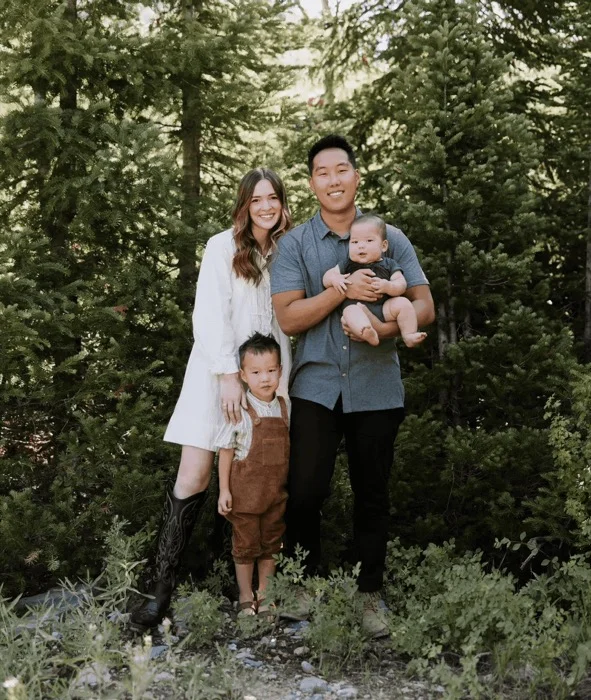
"Airbnb arbitrage is dead." You've probably heard this claim echoing across YouTube, TikTok, and real estate forums. Headlines scream about regulations killing the business model, oversaturation destroying profits, and the "end of easy money."
Here's the truth: I'm generating $34,000 per month from 7 Airbnb properties. I started in December 2021 with $15,000 in bookings my first month and $9,000 in profit. The business model isn't dead—it's evolved. And those who adapt are thriving while others complain.
This article breaks down why the "Airbnb is dead" narrative is misleading, what's actually happening in the industry, and the Bridge Method strategy that separates winners from those struggling in today's market.
In this article:
- The "Airbnb is Dead" Myth
- NYC Local Law 18: What Actually Happened
- The Housing Crisis Myth-Busting
- Bridge Method vs. Traditional Arbitrage
- The 5 Requirements for Success in 2025
- Student Success Stories
- Can You Do This Remotely?
- FAQs
The "Airbnb Arbitrage Is Dead" Myth: What's Really Happening
| What Headlines Claim | What Data Shows |
|---|---|
| 50% revenue collapse | 3.6% industry dip |
| Regulations killed the business | NYC-specific changes, not nationwide |
| Market oversaturated | Quality properties still command premiums |
| No money left to make | Students earning $20K-$90K from single properties |
| Business model broken | $34K/month portfolios still growing |
The reality is simple: Traditional "spray and pray" arbitrage—listing average properties in saturated markets and competing on price—is indeed struggling. But strategic operators using what I call the Bridge Method are seeing their best years yet.
When I started in December 2021, I booked $15,000 my first month with $9,000 profit. Today, my portfolio generates $34,000 monthly from 7 properties. The numbers don't lie: this business model works when executed correctly.
Why the Negative Narrative Exists
Several factors drive the "Airbnb is dead" narrative:
Clickbait Economics: "Airbnb Arbitrage Is DEAD" gets more views than "Airbnb Requires Better Strategy Now." Content creators optimize for engagement, not accuracy.
Early Adopter Struggles: People who entered during the 2020-2021 boom with minimal research and generic properties are now facing competition. Their failure isn't market failure—it's strategy failure.
Confirmation Bias: Struggling operators share their stories loudly. Successful operators are too busy running their businesses to correct the narrative.
Regulatory Headlines: When NYC passed Local Law 18, headlines treated it as an industry death sentence rather than a single-market regulatory change.
NYC Local Law 18: Understanding What Actually Happened {#nyc-law}
NYC Local Law 18 became the poster child for "Airbnb regulation killing the business." Let's break down what it actually does:
What Local Law 18 Requires
- Host Registration: All short-term rental hosts must register with the city
- Host Presence: Hosts must be present in the property during guest stays
- Guest Limits: Maximum of 2 guests per rental
- No Separate Locks: Guests cannot have locks on their bedroom doors that exclude the host
What This Actually Means
Local Law 18 effectively bans traditional Airbnb arbitrage in NYC specifically. Hosts can't rent entire apartments to guests while living elsewhere.
But here's the critical context: NYC is one market out of thousands across the United States. The regulations reflect NYC's specific housing pressures and political environment—not a national trend.
The Revenue Impact: 3.6%, Not 50%
Headlines claimed industry revenues dropped 50%. The actual data shows a 3.6% revenue dip across the short-term rental industry in 2024. That's normal market fluctuation, not collapse.
Some operators in specific markets saw larger drops. Others saw their best years. The difference? Strategy and market selection.
"The people screaming that Airbnb is dead are the same people who copied what everyone else was doing and expected different results. Meanwhile, my students are quietly building $10K, $20K, even $90K portfolios using the Bridge Method."
The Housing Crisis Myth: Why Airbnb Isn't the Villain {#housing-crisis}
A common attack on Airbnb arbitrage claims it's "causing the housing crisis" by removing homes from the long-term rental market. Let's look at the data:
The Numbers Don't Support the Claim
| Metric | Number | Context |
|---|---|---|
| Empty homes in America | ~16 million | Vacant, not being used |
| Homes for sale | ~500,000 | Available inventory at any time |
| Active Airbnb listings (US) | ~660,000 | Less than 1% of total housing |
There are approximately 16 million empty homes in America. These aren't vacation rentals—they're vacant properties sitting unused. Another 500,000 homes are on the market for sale at any given time.
Short-term rentals represent a tiny fraction of total housing inventory. The housing affordability crisis has multiple complex causes:
- Zoning restrictions limiting new construction
- NIMBY opposition to development
- Rising construction costs
- Interest rate fluctuations
- Institutional investor purchases
- Population migration patterns
Blaming Airbnb for housing costs is like blaming food trucks for restaurant industry challenges. It makes a convenient villain but doesn't reflect reality.
The Actual Housing Impact
In most markets, short-term rentals:
- Convert underutilized properties into productive use
- Provide flexible housing options for travelers
- Generate economic activity in local communities
- Support tourism infrastructure
- Create jobs (cleaning, maintenance, management)
Some high-demand urban markets have legitimate concerns about STR density. That's why targeted local regulations (like NYC's) exist. But the "Airbnb is destroying housing" narrative oversimplifies a complex issue.
The Bridge Method vs. Traditional Arbitrage: Why Most Fail and Some Thrive {#bridge-method}
The Bridge Method represents a fundamental shift from how most people approach Airbnb arbitrage. Here's the comparison:
Traditional Arbitrage Approach
| Aspect | Traditional Approach | Result |
|---|---|---|
| Property Selection | Any available rental | Competing with thousands of similar listings |
| Location Strategy | Popular areas everyone targets | Maximum saturation, race to bottom pricing |
| Design Investment | Basic furnishing from big-box stores | Generic experience guests won't remember |
| Listing Quality | iPhone photos, basic description | Lost in search results |
| Operations | Manual everything | Burnout at 2-3 properties |
| Guest Experience | Adequate | No reviews worth sharing |
The Bridge Method Approach
| Aspect | Bridge Method | Result |
|---|---|---|
| Property Selection | High-potential units in quality buildings | Premium positioning from day one |
| Location Strategy | Micro-markets away from saturation | Reduced competition, unique value proposition |
| Design Investment | 10x effort into memorable experiences | Guests become marketing ambassadors |
| Listing Quality | Professional photos, compelling storytelling | Higher click-through and conversion |
| Operations | Technology automation first | Scalable to 10+ properties |
| Guest Experience | Exceptional and shareable | 5-star reviews driving future bookings |
Why "Quality Over Quantity" Wins in 2025
The Bridge Method works because it addresses the actual problem: differentiation in a maturing market.
When markets were new (2015-2020), any listing could succeed. Supply was limited, demand was growing, and guests had few choices.
In mature markets (2021+), basic listings compete with thousands of similar options. The only differentiation becomes price—a race to the bottom that destroys margins.
The Bridge Method "bridges" the gap between commodity arbitrage and premium hosting. You're not competing on price. You're competing on experience, location uniqueness, and guest satisfaction.
My Worst Airbnb vs. Traditional Rental
Here's a perspective shift that changed how I think about this business:
My worst-performing Airbnb property generates more cash flow than 40 traditional rental units combined.
That's not an exaggeration. Traditional rentals might generate $200-300/month in cash flow per door. My lowest-performing short-term rental still produces multiple times that.
The return on time investment (ROTI) for strategic Airbnb properties crushes traditional real estate investing for most operators.
The 5 Requirements for Airbnb Success in 2025 {#requirements}
After scaling to $34,000/month and training thousands of students, I've identified five non-negotiable requirements for success with the Bridge Method:
Requirement 1: Location Research (Micro-Market Analysis)
What it means: Using data tools to identify specific neighborhoods, streets, and property types that are underserved—not just picking "popular cities."
Why it matters: The difference between a property at 70% occupancy and 90% occupancy often comes down to micro-location. A listing two blocks away from tourist attractions might outperform one right next to them due to noise, parking, or neighborhood character.
How to execute:
- Use AirDNA, Mashvisor, or similar tools for market data
- Analyze competitive density by specific neighborhood
- Look for emerging areas before they're saturated
- Understand what drives demand in each micro-market
Pro tip: The best markets often aren't the most obvious. Everyone targets Nashville downtown. Fewer target the specific neighborhoods where bachelorette parties actually prefer to stay.
Requirement 2: Property Research (Unit Selection)
What it means: Identifying properties with inherent advantages that can't be easily replicated by competitors.
Why it matters: Starting with a mediocre property means fighting uphill battles forever. Starting with an exceptional property creates sustainable competitive advantage.
What to look for:
- Unique architectural features
- Premium building amenities
- Views or outdoor space
- Parking advantages
- Walkability to attractions
- Character that photographs well
What to avoid:
- Generic apartment complexes
- Units without natural light
- Locations requiring extensive explanation
- Properties that look like every other listing
Requirement 3: Design Investment (10x The Competition)
What it means: Investing significantly more effort into design, furnishing, and amenities than average operators.
Why it matters: Guests choose based on photos and reviews. Exceptional design creates memorable experiences that generate 5-star reviews and social media exposure.
Design principles:
- Create "Instagram moments" guests will share
- Invest in quality furniture that photographs well
- Add amenities that create talking points
- Design for your target guest demographic
- Think about the story your space tells
Example investments:
- Professional interior design consultation
- Statement furniture pieces
- Quality linens and towels
- Curated local artwork
- Unique lighting fixtures
Requirement 4: Professional Listing Optimization
What it means: Treating your Airbnb listing like a sales page, not a classified ad.
Why it matters: The best property with poor photos and weak copy will underperform average properties with excellent listings.
Key elements:
- Professional photography: Non-negotiable. The ROI is immediate
- Compelling title: Feature your unique value proposition
- Strategic description: Sell the experience, not just features
- Optimized amenities: Check every relevant box accurately
- Pricing psychology: Position as premium, not discount
Requirement 5: Technology Automation
What it means: Building systems that handle operations without your constant involvement.
Why it matters: Without automation, you hit a ceiling at 2-3 properties before burning out. With automation, you can scale to 10+ properties with less work than managing one manually.
Essential tech stack:
- Dynamic pricing: PriceLabs or Wheelhouse for rate optimization
- Guest messaging: Hospitable or Host Tools for automated communication
- Cleaning coordination: Turno for scheduling turnover teams
- Smart locks: Remote access without key exchanges
- Noise monitoring: Minut or NoiseAware for issue prevention
Student Success Stories: The Bridge Method in Action {#success-stories}
The best proof of any strategy is results. Here are real students implementing the Bridge Method:
Chad: $90,000/Year from ONE Property
Chad took a single-property approach and optimized every element using the Bridge Method. His results:
| Metric | Chad's Results |
|---|---|
| Properties | 1 |
| Annual Revenue | $90,000+ |
| Strategy | Maximum optimization, premium positioning |
| Key Differentiator | Exceptional design and guest experience |
Chad's story proves you don't need dozens of properties to build significant income. One exceptional property, properly executed, can replace a full-time salary.
Hampton: $20,000 First Month
Hampton implemented the Bridge Method from day one and saw immediate results:
| Metric | Hampton's Results |
|---|---|
| First Month Revenue | $20,000 |
| Time to First Booking | Days after listing |
| Approach | Quality property in micro-market, professional setup |
Hampton's first-month results exceeded what many operators achieve after years of trial and error.
The Pattern Across Successful Students
Analyzing hundreds of student outcomes reveals consistent patterns:
What successful students do:
- Research markets thoroughly before committing
- Invest more upfront in design and setup
- Use professional photography immediately
- Implement automation from day one
- Focus on guest experience over cutting costs
What struggling students do:
- Rush into markets without research
- Minimize furnishing costs
- Take their own listing photos
- Try to handle everything manually
- Prioritize maximizing bookings over guest satisfaction
Can You Really Do This 100% Remotely? {#remote}
Yes. I live in Utah. My properties are in Arizona. I've never needed to be physically present to run this business.
How Remote Operations Work
Cleaning Coordination: Turno automatically notifies cleaning teams when guests check out and new guests arrive. Teams have access codes and checklists. I never coordinate manually.
Guest Communication: Hospitable handles 90%+ of guest messages automatically. Check-in instructions, house rules, local recommendations, and checkout reminders all send without my involvement.
Maintenance Issues: Local handymen and service providers handle problems. Smart home devices alert me to issues before guests even notice.
Access Management: Smart locks eliminate key exchanges. Guests receive unique codes. Codes automatically change between bookings.
Financial Tracking: Property management software tracks revenue, expenses, and profitability automatically.
The Remote Operator Advantage
Operating remotely actually creates advantages:
- Market selection: Not limited to where you live
- Cost arbitrage: Live in lower-cost areas while operating in higher-revenue markets
- Scalability: Systems work regardless of location
- Lifestyle flexibility: Travel while your business runs
"The biggest misconception is that you need to be near your properties. I've built a $34K/month portfolio without living in the same state as any of my rentals. The systems do the work."
Watch the Full Breakdown
Video highlights:
- 0:00 - Why "Airbnb is dead" is misleading
- 3:30 - NYC Local Law 18 explained
- 6:45 - Housing crisis myth-busting with data
- 9:20 - Bridge Method vs. Traditional Arbitrage breakdown
- 12:15 - Student success stories ($90K from one property)
- 15:00 - The 5 requirements for 2025 success
- 17:30 - Remote operations demonstration
Frequently Asked Questions
Is Airbnb arbitrage actually dead in 2025?
No. Traditional "spray and pray" arbitrage is struggling, but strategic operators using the Bridge Method are seeing strong results. I generate $34,000/month from 7 properties. Students earn $20K-$90K from well-executed single properties. The business model works when executed correctly.
What's the real industry revenue impact?
The actual industry-wide revenue dip was 3.6%—not the 50% collapse headlines suggest. Some markets and operators saw larger drops; others had their best years. The difference is strategy, not market conditions.
How quickly can I start generating income?
With proper execution, some students see their first month revenue of $15,000-$20,000. My first month (December 2021) produced $15,000 in bookings with $9,000 profit. Speed depends on market selection, property quality, and setup execution.
Do I need to live near my properties?
No. I live in Utah with properties in Arizona. With proper systems (cleaning coordination, automated messaging, smart locks, remote maintenance), you can operate entirely remotely. Many successful operators manage properties in cities they rarely or never visit.
What startup capital do I need?
Budget $5,000-$15,000 per property for pure arbitrage (first month rent, deposit, furnishing). The Bridge Method may require additional investment in design elements, but the ROI justifies higher upfront costs through premium rates and higher occupancy.
Is the Bridge Method different from what others teach?
Most education focuses on volume—getting as many properties as possible. The Bridge Method focuses on quality and differentiation. Fewer properties, better execution, premium positioning, and sustainable competitive advantage.
Start Building Your Portfolio
Ready to implement the Bridge Method and build a profitable Airbnb business?
The operators who will thrive in 2025 and beyond aren't those chasing the latest "hack" or competing on price. They're those who commit to quality, invest in differentiation, and build systems that scale.
Learn the complete Bridge Method framework with Legacy Investing Show
More Resources
- How Gary Built a $35,000/Month Airbnb Business - Another student case study
- Complete Guide to Getting Started with Airbnb Arbitrage
About Legacy Investing Show
Legacy Investing Show is my comprehensive Airbnb arbitrage training program built on the Bridge Method framework. Since founding, the program has:
- Trained 2,000+ students across the United States
- Generated $10M+ in cumulative student revenue
- Produced students earning $10K-$90K from single properties
- Built an active community of strategic short-term rental investors
I created Legacy Investing Show to teach the exact systems that scaled my business from $15K first-month bookings to $34K/month—providing the strategy, scripts, and community that accelerate success.
Learn more about the program | Watch free training
This analysis is based on current market data, personal portfolio performance, and student results as of January 2025. Individual results vary based on market selection, execution quality, and capital invested. The 3.6% revenue dip statistic references industry reports; NYC Local Law 18 details are from official city regulations.
Last updated: January 24, 2026
Frequently Asked Questions
No. Airbnb arbitrage isn't dead—it's evolved. Traditional 'spray and pray' arbitrage with average properties in oversaturated markets is struggling. But the Bridge Method, which focuses on quality over quantity, micro-location research, and exceptional guest experiences, is generating $34K+/month for operators who adapt.
The Bridge Method is a strategic approach to Airbnb arbitrage that 'bridges' the gap between traditional arbitrage and premium hosting. It involves 5 key pillars: micro-location research away from saturation, quality property selection, 10x effort into design and amenities, professional listing optimization, and technology automation for operations.
No. NYC Local Law 18 requires hosts to register, be present during stays, and limits guests to two per rental. While it changed the NYC market specifically, it didn't 'kill' Airbnb arbitrage nationally. The actual industry revenue dip in 2024 was only 3.6%—not the 50% drop that clickbait headlines suggest.
The data doesn't support this claim. There are approximately 16 million empty homes in America and 500,000 homes for sale at any given time. Short-term rentals represent a tiny fraction of total housing inventory. The housing affordability crisis has multiple complex causes, but Airbnb isn't the primary driver.
Results vary based on market, strategy, and execution. Preston Seo generates $34,000/month from 7 properties. Student Chad earns $90,000/year from a single property. Student Hampton made $20,000 his first month. The key is implementing the Bridge Method rather than traditional arbitrage approaches.
Yes, 100%. Preston lives in Utah while his properties are in Arizona. With proper systems for cleaning coordination, guest communication, and technology automation, you never need to physically visit your properties. Many successful operators manage portfolios entirely remotely.
Traditional arbitrage focuses on quantity—getting as many properties as possible with minimal investment per unit. The Bridge Method focuses on quality—fewer properties with exceptional design, amenities, and guest experience that command premium rates and reduce competition. It's about being the best option, not the cheapest.
The 5 requirements are: (1) Location research using data tools to find micro-markets away from saturation, (2) Property research to identify units with potential for premium positioning, (3) Design investment that creates memorable guest experiences, (4) Professional listing optimization with quality photos and compelling copy, (5) Technology automation for operations and guest communication.
Preston started in December 2021, booking $15,000 in his first month with $9,000 in profit. He scaled strategically using the Bridge Method principles to reach $34,000/month from 7 properties within a few years, proving the model works even in changing market conditions.
Based on student results, the program has produced numerous success stories: Chad earning $90K/year from one property, Hampton making $20K his first month, and hundreds of students building profitable portfolios. The program teaches the Bridge Method framework that differentiates successful operators from those struggling in 2025.